Helping Outreach Workers Drive Bowel Screening Uptake in New Zealand
The Challenge
Bowel cancer remains one of New Zealand’s leading causes of preventable death. Making available free screening kits supported by national awareness campaigns is a key strategy for keeping more kiwis healthy. The National Bowel Screening Programme, run by Te Whatu Ora, also recognised that improving these outcomes required more than just distributing information. Engaging outreach workers was essential to maximising uptake, particularly with communities where awareness, trust, and comfort with the process were limited
The challenge was behavioural as well as informational. Outreach workers already knew their communities well, but they needed new approaches to engage people effectively, spark confidence, and normalise conversations about screening. The goal was to improve workers’ communication with potential participants in the programme, encouraging meaningful, culturally grounded dialogue that saw people wanting to take part and perform the test correctly.
Our Partnership
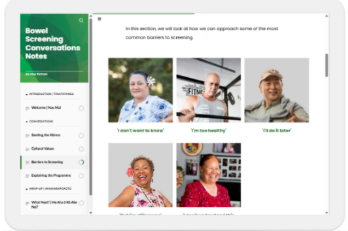
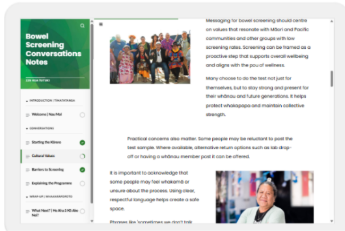
We partnered with Te Whatu Ora’s National Bowel Screening Programme to create a learning experience that focused on transforming behaviour through experience. Together, we designed an interactive online course that lets people learn by doing, not passively consuming information. The course encourages outreach workers to explore real situations, share ideas, and practice key skills in ways that feel natural and useful.
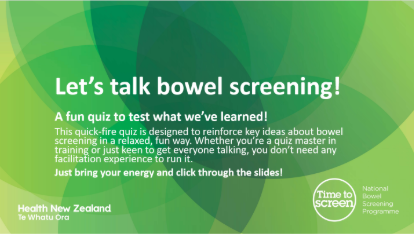
Alongside digital modules, we built in social and reflective learning activities. A team-based quiz sparked conversation and collaboration, helping outreach workers support one another. A follow-up refresher activity helps keep messages relevant and ensures the learning stays active. The result is a practical and balanced approach, that suits the way the workers naturally connect and communicate within their communities.
The Impact
The experience drives cultural as well as behavioural change. It encourages outreach workers to move from transactional conversations to authentic engagement, building trust and confidence both within their teams and in the communities they serve. This tone and approach are key to improving screening participation and accuracy.
Though rollout is just beginning, early indications suggest stronger collaboration, better engagement, and greater confidence among learners. Over time, this initiative is expected to lead to higher screening rates, fewer spoiled tests, and ultimately, fewer preventable deaths from bowel cancer. By embedding behavioural learning into public health training, Synapsys and the National Bowel Screening Programme are helping transform how health messages are shared and understood across Aotearoa New Zealand.